
5 Takeaways From Climate Week NYC 2026
Climate action isn't slowing down, but the way companies make the business case for it is changing.

Published:
Climate Week NYC 2026 brought sustainability leaders from around the world to New York for a week of conversations about the future of corporate climate action.
This year, those conversations took place against a complicated backdrop. Regulations and reporting requirements are shifting, budgets are under pressure, sustainability teams are being asked to do more with less, suppliers remain difficult to engage, and companies are increasingly expected to demonstrate not only that their climate programs reduce emissions, but that they create measurable value for the business.
At the same time, the underlying market forces driving decarbonization continue to accelerate. Renewable energy is increasingly cost competitive, investment in clean energy continues to grow, and the financial consequences of physical climate risk are becoming harder for businesses to ignore.
That tension shaped many of our conversations throughout Climate Week NYC 2026.
Green Project at Climate Week NYC 2026
This year, Green Project hosted two events centered around a single question: How can companies keep making meaningful progress in an increasingly complicated environment?
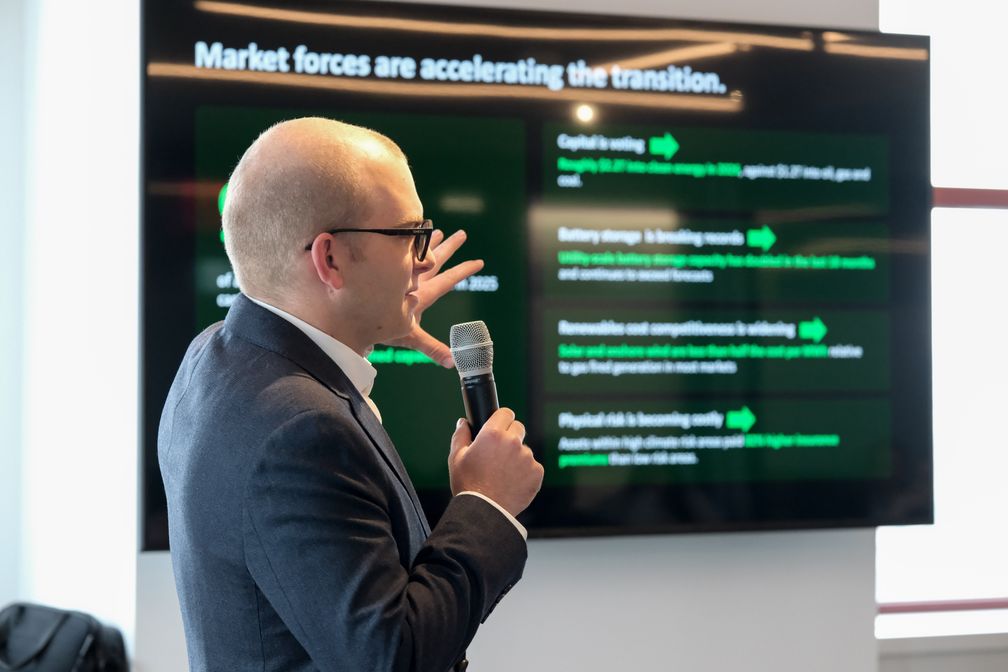
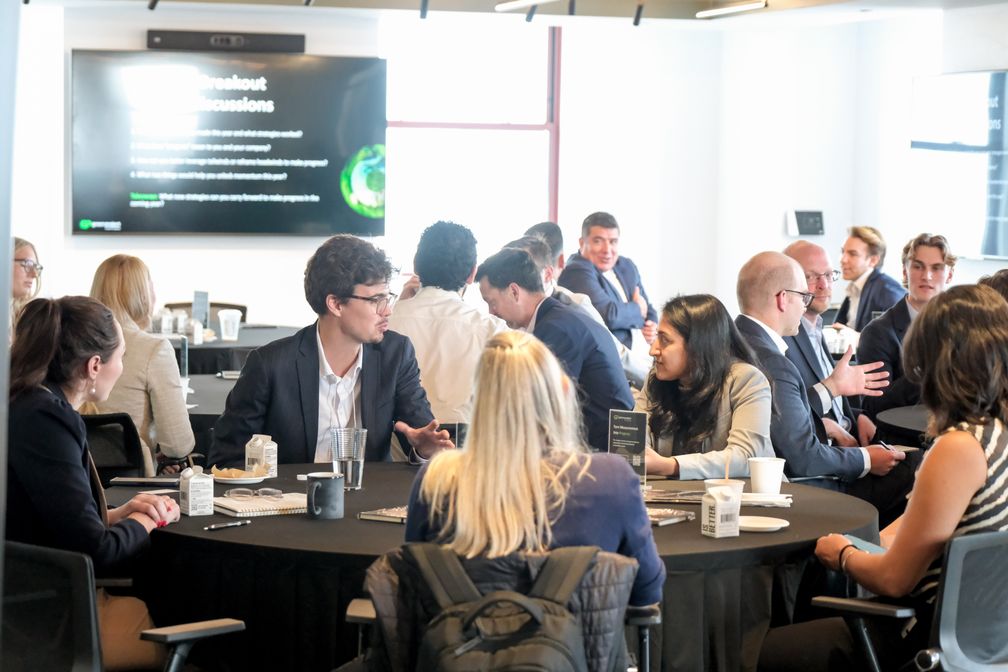
We started Wednesday morning with "Making Steady Progress in an Unsteady World," an interactive breakfast workshop co-hosted with Kearney.
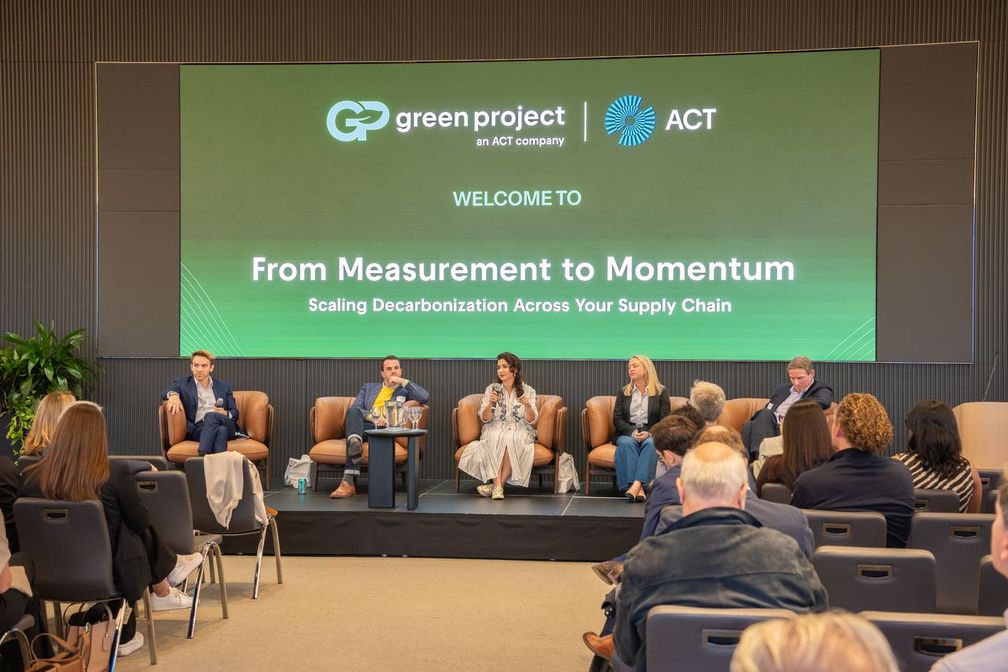
Later that evening, we brought the conversation to the supply chain with "From Measurement to Momentum: Scaling Decarbonization Across Your Supply Chain," alongside ACT Group and sustainability leaders from Saks Global, Booking Holdings, and Medtronic.
The discussion explored what it takes to move beyond carbon measurement and turn increasingly sophisticated emissions data into real decarbonization.
5 Takeaways from Climate Week NYC 2026
1. The business case for sustainability is changing
Sustainability teams aren't necessarily being given bigger budgets or more resources. Instead, they're being asked to make increasingly strategic decisions about where to focus them. That makes the business case behind climate initiatives more important than ever.
We repeatedly heard that risk mitigation, cost savings, resilience, and ROI are resonating with internal stakeholders. Customer acquisition and retention can be particularly powerful. When sustainability performance is connected to keeping or growing customer relationships, securing investment becomes considerably easier.
The takeaway isn't that companies no longer care about sustainability, but that sustainability leaders are becoming more sophisticated about how they communicate its value.
2. Customer pressure is becoming one of the strongest tailwinds
While the regulatory landscape remains uncertain, another source of pressure hasn't disappeared: customers.
Companies continue to face requests from customers for better emissions data, product carbon footprints, reduction plans, and evidence of progress. For suppliers, particularly those serving large companies with ambitious Scope 3 targets, sustainability performance is increasingly connected to the commercial relationship.
When climate action supports customer relationships, sustainability becomes more than a reporting exercise.
3. Scope 3 is still hard, but the conversation is moving forward
If there was one familiar challenge at Climate Week, it was this: Scope 3 remains difficult.
Data collection and calculation quality continue to be major obstacles. Suppliers don't always respond to requests, and many lack the resources, incentives, or capabilities required to calculate emissions and take action.
We heard many of the same challenges last year during Climate Week NYC 2025. A year later, that challenge remains, but the conversation is becoming more sophisticated.
The question is shifting from "How do we get suppliers to respond?" toward "How do we make it easier and more valuable for them to act?"
4. Sustainability teams have to do more with what they already have
Team sizes aren't necessarily growing, even as sustainability requirements expand. Companies are navigating different reporting regimes across geographies, increasingly complex emissions datasets, evolving voluntary standards, customer demands, and pressure to show progress against targets.
Doing more with less requires prioritization. For many companies, that means focusing resources on interventions with the strongest combination of emissions impact and business value. It also means finding the right partners, automating manual work where possible, and building data foundations that can support multiple reporting and decarbonization needs rather than starting from scratch every time requirements change.
5. The decarbonization toolkit is expanding
Market-based instruments were a major topic throughout the week, both for companies' own operations and increasingly across their supply chains. Some companies are even exploring procuring renewable energy on behalf of suppliers when doing so can remove barriers to action.
But while market-based instruments can play an important role in corporate climate strategies, companies also need to distinguish between accounting mechanisms and the physical interventions required to address emissions at their source.
That's becoming especially important as companies begin tackling harder-to-abate emissions sources, from industrial heat to business travel.
Making Progress in an Unsteady World
The sustainability environment is undeniably challenging. Regulatory requirements are changing. Teams and budgets are stretched. Supplier engagement remains difficult.
But uncertainty in the regulatory environment doesn't erase the market forces pushing the transition forward.
Companies can identify where market tailwinds are already working in their favor, connect climate initiatives more directly to ROI, resilience, risk, and customer demand, and concentrate resources where they can create the greatest impact.
Our conversations throughout Climate Week also reinforced something harder to quantify: relationships matter.
No company is navigating these challenges alone. Some of the most valuable moments of the week happened not on a stage, but around breakfast tables, after panels, and in conversations between sustainability leaders facing many of the same problems.
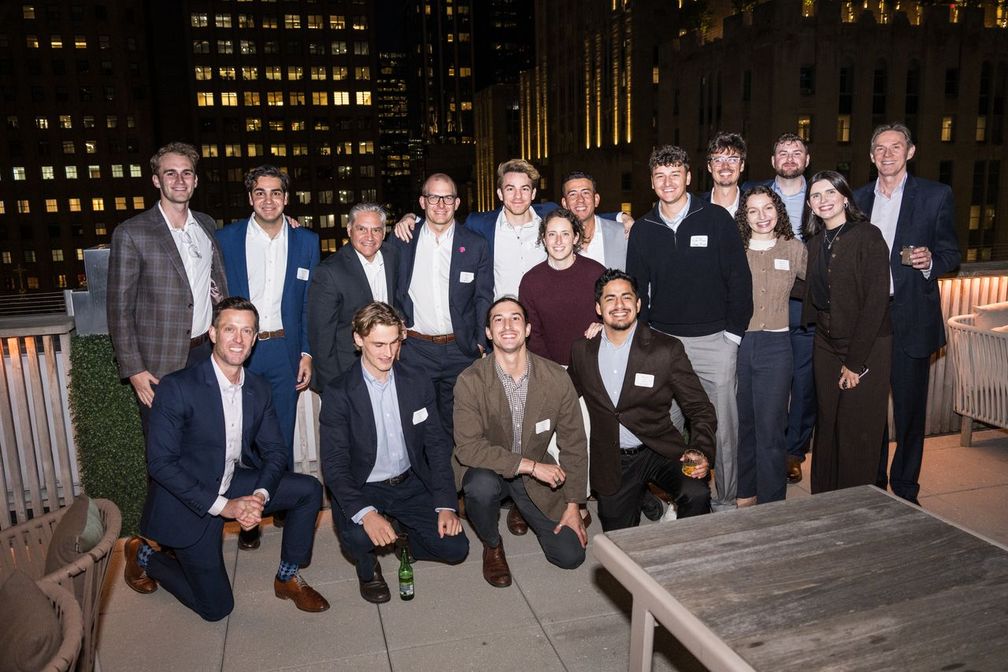
Thank you to everyone who joined us, challenged our thinking, and shared what you're seeing inside your own organizations.
We'll see you next year!
About the author

Kate O'Flynn
Marketing
Kate O'Flynn is a Marketing Associate at Green Project Technologies, an AI climate management platform helping businesses of all sizes measure, manage, and reduce emissions across complex global value chains.